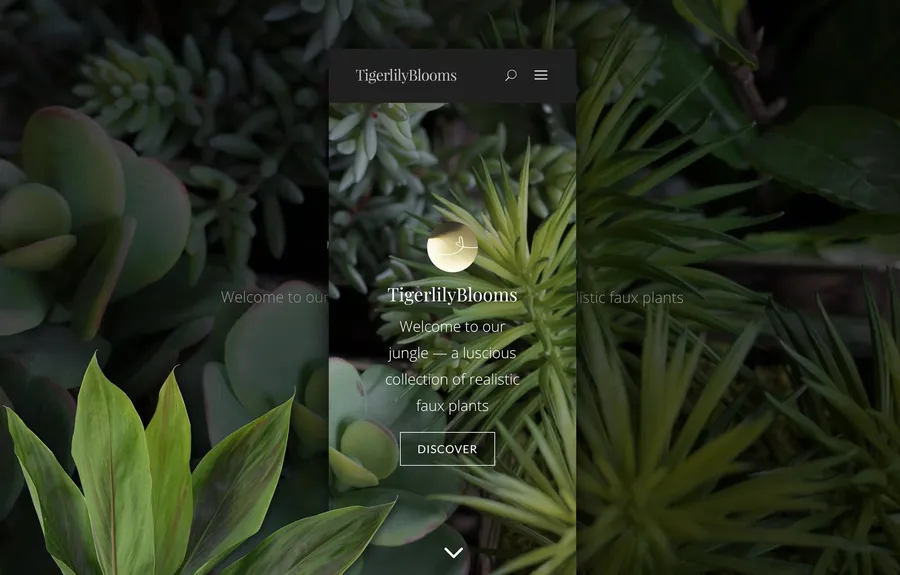
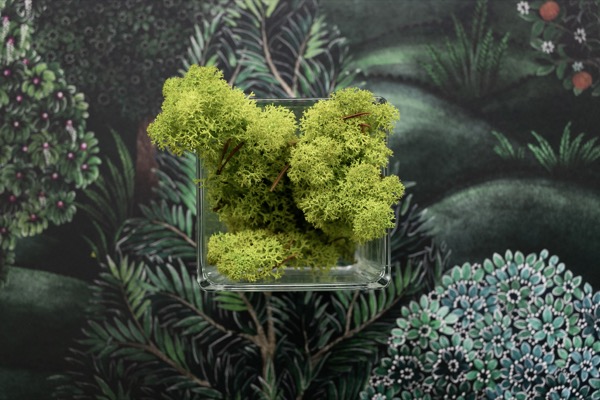
About. TigerlilyBlooms is an eCommerce store that specialises in permanent botanicals. As a supplier to B2B, as well as private individuals, TigerlilyBlooms offers sustainable and low-maintenance alternatives to real indoor plants of a higher quality than competitors.
Role. Company Owner and Product Designer
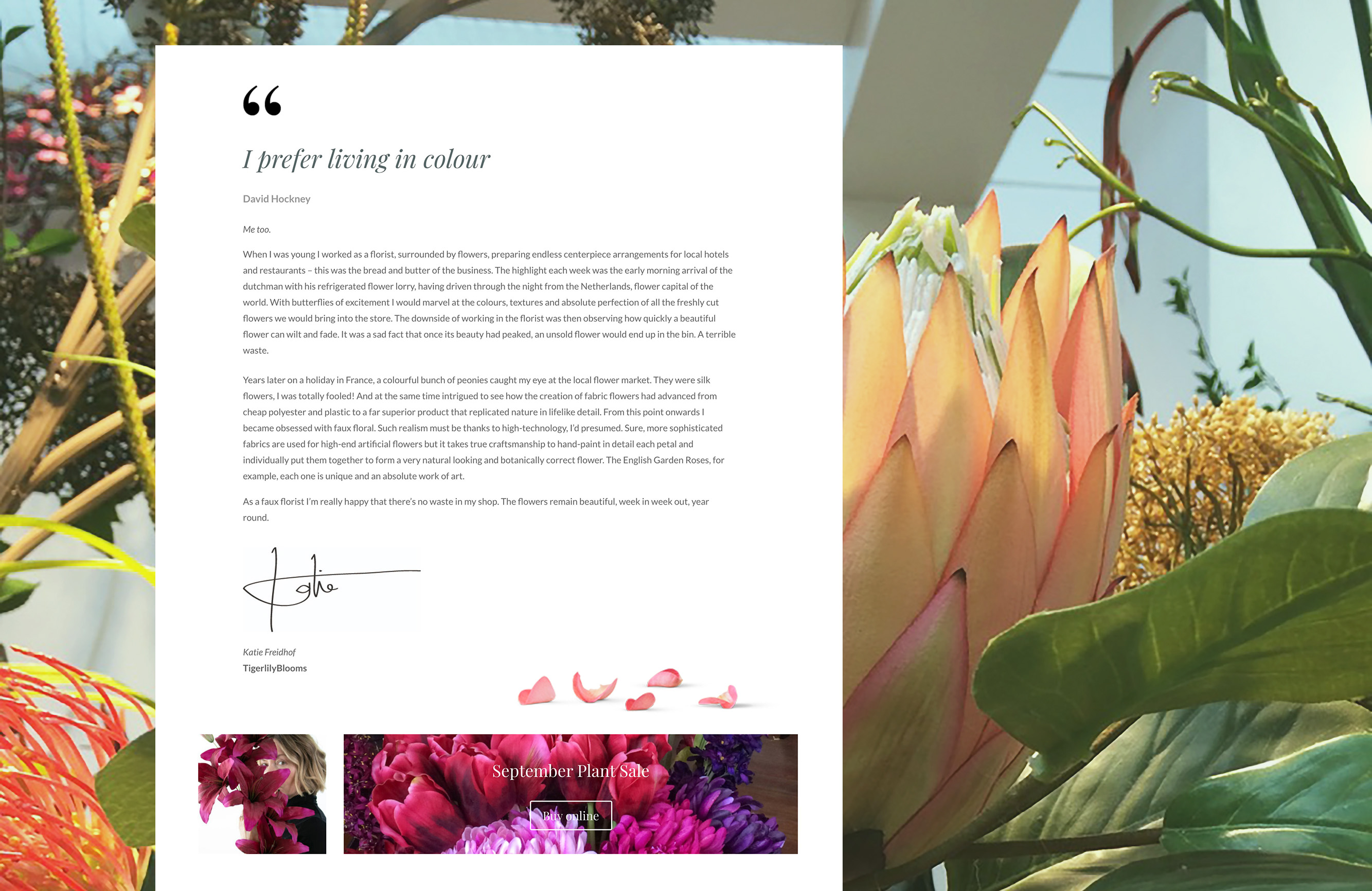
Inspiration. This project was inspired by some gorgeous flowers that caught my attention at a flower market in France. The flowers turned out to be fake and had me completely fooled, though by the end of lunch that day those beautiful peonies had seeded an exciting new business idea. By combining the experience I’d gained working in the florist industry when I was younger, I aimed to blend my love for plants and floristry knowledge, along with my expertise in product design.
USP. The possibility to add attractive greenery to spaces where plants don't grow. For example, restaurants, hotels, cafes and spas, have all used TigerlilyBlooms’ botanicals to create an inviting and lush atmosphere for guests, without worrying about lighting, watering, and withering arrangements, while at the same time notably reducing maintenance costs.
Goal. Provide a sustainable, low-maintenance green solution for diverse spaces. Windowless rooms, darkly lit or in direct sunlight. Otherwise in areas that are difficult to maintain or hard to reach. Helping to keep hotels, restaurants and homes in bloom. Improve discovery and conversion through a simplified buying journey.
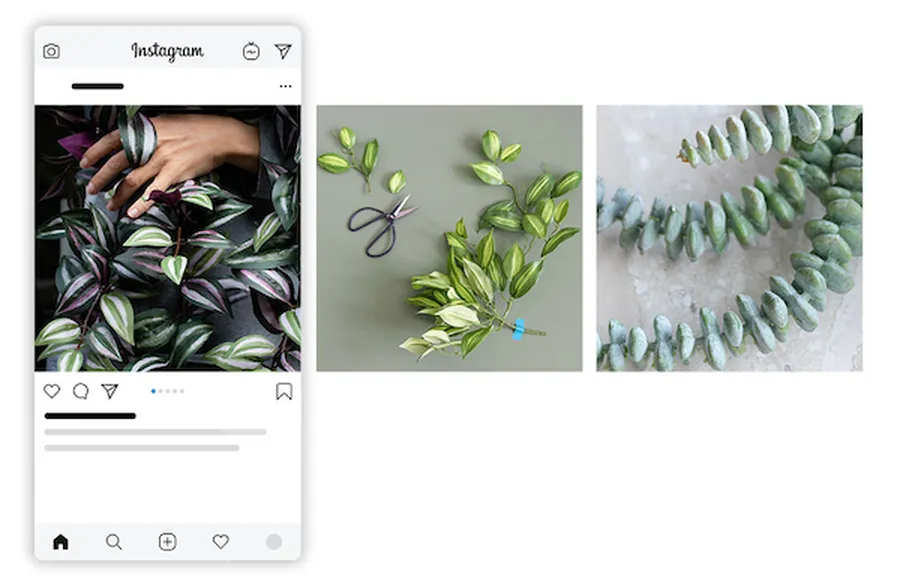
UX Strategy. Focus the experience on curated recommendations and lifestyle storytelling. - Understand the purchasing needs of the target group. - Redefine the image of fake plants. - Recreate a brick-and-mortar experience with creative product visuals and highly detailed descriptions that would help to emotionally connect the customer with the product. - Offer customers a superior product and top customer service. - Creating a positive experience throughout the customer journey. - Gain an edge over competition in a saturated e-commerce market.
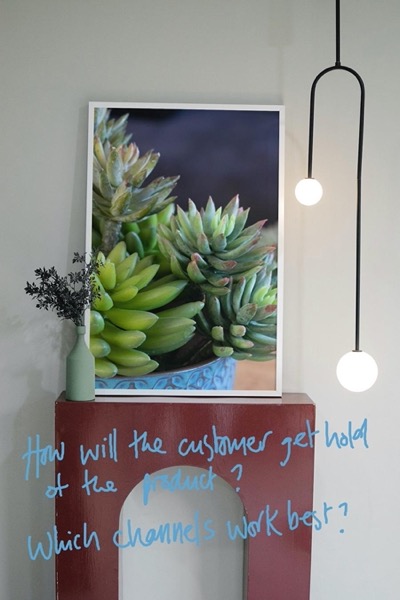
Process. Identifying the main target group, understanding what are the main drivers of consumer usage and which channels work best? Mapping out touchpoints in the end-to-end customer journey. These extended beyond those of the digital applications I was more accustomed to analysing in previous projects. It was an interesting learning curve.
Challenge. Entering a saturated ecommerce market as a newcomer without prior experience of running an online shop. Though what I lacked in experience I made up for with the courage to dive in at the deep end and continuously learn and understand through research, training, and observing masters in the trade as these became my mentors.
Obstacles. Accepting there are critical points during the customer journey I had no influence over, like shipping delays. However, I assumed accountability for this to meet the expectations and interests of my customers, for example, with increased customer support through regular communication.
Methodology. User research, service mapping, visual concepting, SWOT analysis, industry trend reports, trade shows, analysing customer purchasing preferences and behaviour when buying houseplants.
Result. Loyal repeat customers from worldwide individuals to luxury hotels, international shops and business. Understanding the customer needs and the emotions the product evoked in them was a successful and unique selling point I leveraged.